




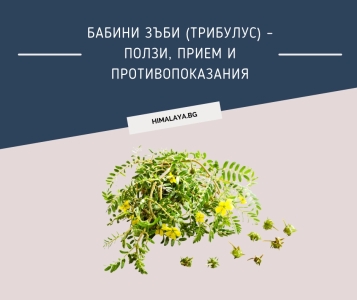
Tribulus terrestris, known in Ayurveda as Gokshura, is one of the most popular herbs traditionally associated with vitality, libido and reproductive health. It has been used for centuries in traditional Indian and Bulgarian medicine and is now an ingredient in numerous dietary supplements for men, women and physically active individuals.
Thanks to its rich content of steroidal saponins, the plant has attracted considerable scientific interest and has been the subject of several clinical studies.
What Is Tribulus Terrestris?
Tribulus terrestris is a herbaceous plant found throughout Europe, Asia and Africa, including Bulgaria. It is also commonly known as puncture vine due to its distinctive spiny fruits.
Its naturally occurring bioactive compounds include:
-
Steroidal saponins, including protodioscin.
-
Flavonoids.
-
Polyphenols.
-
Plant sterols.
Saponins are of particular scientific interest and are among the plant's most extensively studied compounds.
What Are the Benefits of Tribulus Terrestris?
1. Male Reproductive Health and Libido
Tribulus terrestris is one of the most popular herbs traditionally used in the care of male reproductive health and sexual vitality.
In a double-blind, placebo-controlled clinical study conducted in 2017 involving 180 men, a 12-week intake of a specific standardized Tribulus terrestris extract resulted in statistically significant improvements in sexual desire, sexual function and satisfaction compared with placebo.
Reproductive health remains one of the most extensively researched areas of Tribulus terrestris.
2. Tribulus Terrestris for Women
Although particularly popular among men, Tribulus terrestris has also attracted scientific interest in relation to female sexual health.
Clinical research has reported positive findings in areas such as sexual desire, arousal and satisfaction in women.
The herb has been studied in both premenopausal and postmenopausal women.
3. Vitality and Physical Activity
In traditional Ayurvedic practice, Tribulus terrestris is associated with physical strength, vitality and energy.
Today, it is a popular ingredient in dietary supplements designed for athletes and individuals with an active lifestyle.
4. Traditional Urinary Tract Care
Tribulus terrestris has a long history of use in Ayurvedic practices associated with urinary tract care.
The herb is included in several classical Ayurvedic formulations traditionally used to maintain overall balance and urinary comfort.
5. Antioxidant Properties
Tribulus terrestris contains naturally occurring flavonoids and polyphenolic compounds whose antioxidant properties have been investigated in laboratory studies.
These compounds contribute to the plant's rich bioactive composition.
Does Tribulus Terrestris Increase Testosterone?
Tribulus terrestris is frequently associated with testosterone, particularly among physically active men.
Interestingly, positive results in some clinical studies investigating sexual function have been observed without significant increases in testosterone levels.
Current research does not establish Tribulus terrestris as a reliable testosterone booster. Its traditional applications extend beyond this hormone and include different aspects of vitality and general well-being.
How to Choose a Tribulus Terrestris Supplement
Tribulus terrestris supplements are available as tablets and capsules containing herbal powder, concentrated extracts or a combination of both.
When choosing a quality supplement, consider:
-
The origin and quality of the herbal ingredients.
-
Herbal extract content.
-
Standardization of active compounds, where specified.
-
Recommended daily dosage.
-
Manufacturing and quality control standards.
Organic Tribulus – Himalaya Wellness
Organic Tribulus by Himalaya Wellness is part of the company's organic dietary supplement range and is designed for individuals looking for a single-herb Tribulus terrestris supplement.
-
60 tablets, 688 mg each.
-
Convenient once-daily intake.
-
Two-month supply.
-
Organic product.
A practical choice for those looking for a ready-to-use Tribulus terrestris supplement with a convenient daily routine.
Discover Organic Tribulus – Himalaya Wellness.
Tribulus Terrestris in Ayurvedic Herbal Formulations
In Ayurveda, Tribulus terrestris is used both as an individual herb and in combination with other botanical ingredients.
It is included in various traditional Ayurvedic formulations by Himalaya Wellness, including Speman, Speman Forte, Diabecon, Geriforte, Himplasia, Rumalaya and Tentex Royal.
When choosing between a single-herb supplement and a combined Ayurvedic formulation, consider the complete composition and intended use of the product.
How to Take Tribulus Terrestris
Tribulus terrestris is taken daily, with the recommended dosage depending on the composition and concentration of the selected supplement.
Organic Tribulus by Himalaya Wellness is taken once daily, one tablet per day.
For supplements with a recommended twice-daily dosage, intake may be divided between morning and evening.
Taking the supplement with food may be more comfortable for individuals with sensitive stomachs, provided this is consistent with the product instructions.
How Long Should You Take Tribulus Terrestris?
In clinical studies, Tribulus terrestris is commonly taken for periods ranging from 4 to 12 weeks.
Regular daily intake is important. For longer periods of use, follow the recommendations for the specific supplement and consider your individual health circumstances.
Can Tribulus Terrestris Be Taken with Ashwagandha?
Tribulus terrestris and Ashwagandha are two of the most popular herbs in Ayurveda. Both are found in traditional Ayurvedic formulations associated with vitality and general well-being.
When combining supplements, consider their ingredients, recommended daily dosages and individual product instructions.
Learn more in our article "Ashwagandha – Dosage, Timing and Duration of Use".
Tribulus Terrestris – Contraindications and Side Effects
Tribulus terrestris may cause mild digestive discomfort or nausea in sensitive individuals.
Use during pregnancy and breastfeeding is not recommended. Individuals with chronic health conditions or those taking medication or hormonal therapy should consult a healthcare professional before use.
Dietary supplements should not replace a varied diet or prescribed medical treatment.
Tribulus Terrestris – Tradition and Modern Science
With its rich botanical composition and long history of traditional use, Tribulus terrestris holds a special place among Ayurvedic herbs. Modern clinical research into sexual and reproductive health continues to contribute to scientific interest in this plant.
Clinical findings relate to the specific extracts and formulations studied.
Whether you prefer a single-herb Tribulus terrestris supplement or a combined Ayurvedic formulation, choose a product with clearly identified ingredients, quality-controlled raw materials and a convenient daily dosage.
Explore our range of Tribulus terrestris supplements.
Scientific References
-
Kamenov et al. Evaluation of the efficacy and safety of Tribulus terrestris in male sexual dysfunction. Maturitas, 2017. PMID: 28364864.
-
Clinical research on Tribulus terrestris and female sexual function.
-
Effects of Tribulus Supplementation on Erectile Dysfunction and Testosterone Levels in Men – A Systematic Review of Clinical Trials, 2025.











Post comment